The Golf LabNewsletter
Headquarters in King City, Ontario, Canada
Assistant Coach - Graeme MacDougall Articles
Off-Season Training | The Golf Lab
The Importance of Baseline Testing
Before we change the swing, we need to understand it. Here’s why the smartest work of the year starts before the snow falls.
By Graeme MacDougall
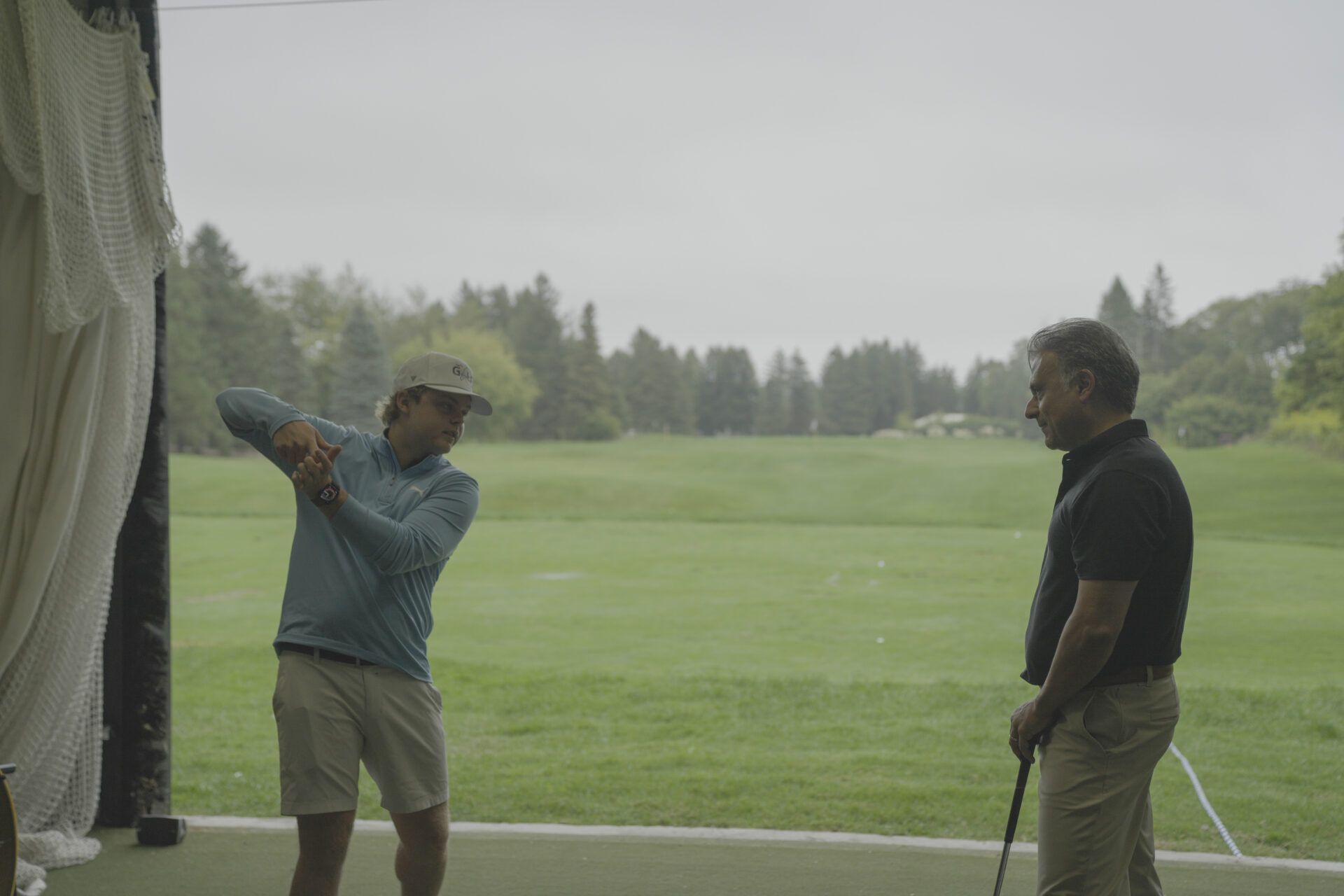
During my college golf career, winter was when I made my biggest swing changes. In my first year, I struggled with a left miss and a sloppy top position that got me stuck in the downswing. I could fight it with practice, but I didn’t own the swing I was working toward.
After a winter of indoor work focused on movement rather than outcomes, things clicked. I finished T-2 in my first event back. Looking back, understanding my tendencies and maintaining my swing year-round made all the difference.
“Golf season doesn’t start in the spring.”
Our baseline evaluation gives us that starting point. Before winter, while the swing is still fresh and active, we use Swing Catalyst Dual Plates, GEARS 3D motion capture, movement screening, Trackman, and other assessment tools to build a measurable picture of how a golfer moves, uses the ground, sequences their body, and delivers the club. Just as important, we talk through the student’s goals, strengths, and weaknesses so we understand the person behind the swing.
From there, we can build new patterns or maintain existing ones over the course of the winter.
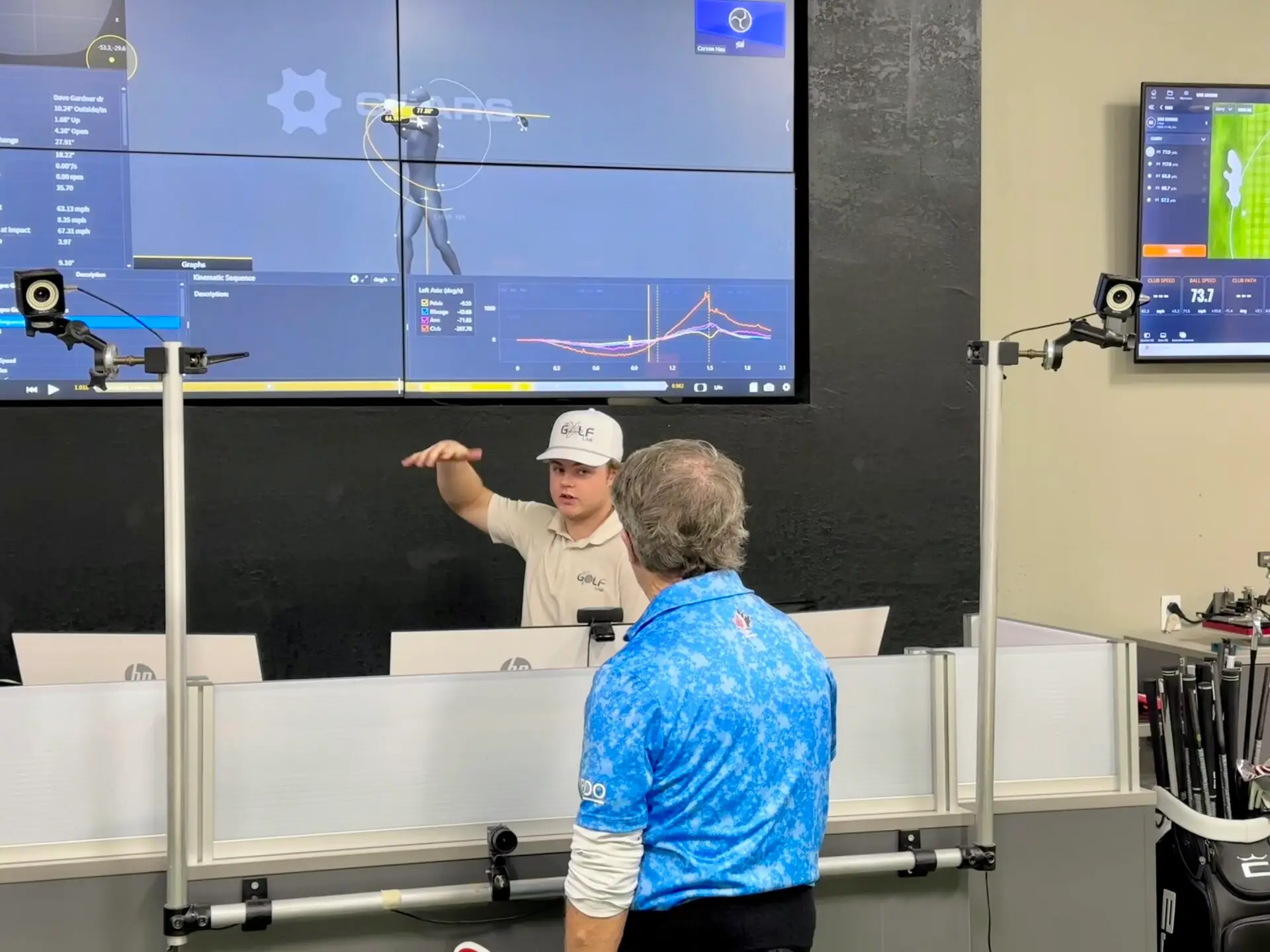
When the player returns in the spring, a mid-season baseline allows us to repeat the same testing, measure what actually changed, and identify what still needs attention before the season gets into full swing. It becomes an important pre-season preparation tool, helping us make sure the physical and technical work from the winter is translating into a golf swing that is ready to perform.
Did the student improve physically? Did their movement and sequencing change? Did club delivery become more efficient? And most importantly, did those changes get them closer to their goals?
Test before winter. Develop through the off-season. Retest in spring. Prepare for the season. Measure the change.
AT A GLANCE
Your Off-Season Roadmap
Golf season doesn’t start in the spring. Working on motor pattern changes when scores don’t matter is how you make faster progress. Skip topping golf balls in front of business partners or friends. Work through those growing pains at The Golf Lab while the snow is falling.
Before Winter
- Capture the swing while it’s still fresh
- Establish a measurable starting point
- Movement & physical screening
- Swing Catalyst force plates
- GEARS 3D motion capture
- Club delivery
- Identify priorities for winter development
Over the Winter
- Train
- Develop
- Make targeted changes
- Build physical and technical capacity
Spring Mid-Season Baseline
- Repeat the same testing
- Measure what changed
- Identify what still needs work
- Confirm winter changes are transferring to the swing
- Prepare for the season
TEST → DEVELOP → RETEST → PERFORM
Understand first. Intervene second. Measure always.

Graeme MacDougall is a former college golfer and coach at The Golf Lab. Book your baseline evaluation at mygolflab.ca.
Equipment | Honma TW777 Irons
Redefining Forgiveness Through CG and MOI
Honma’s TW777 Px, Vx, and Tour V share a nearly identical CG projection. Their MOI tells a different story.
By: Carson Hau
When we talk about forgiveness in irons, most golfers immediately think about larger clubheads and wider soles. However, two of the most important factors influencing forgiveness are center of gravity (CG) and moment of inertia (MOI).
The new Honma TW777 lineup, featuring the Px, Vx, and Tour V, takes an interesting approach to both.
Three Irons, One Remarkably Consistent CG
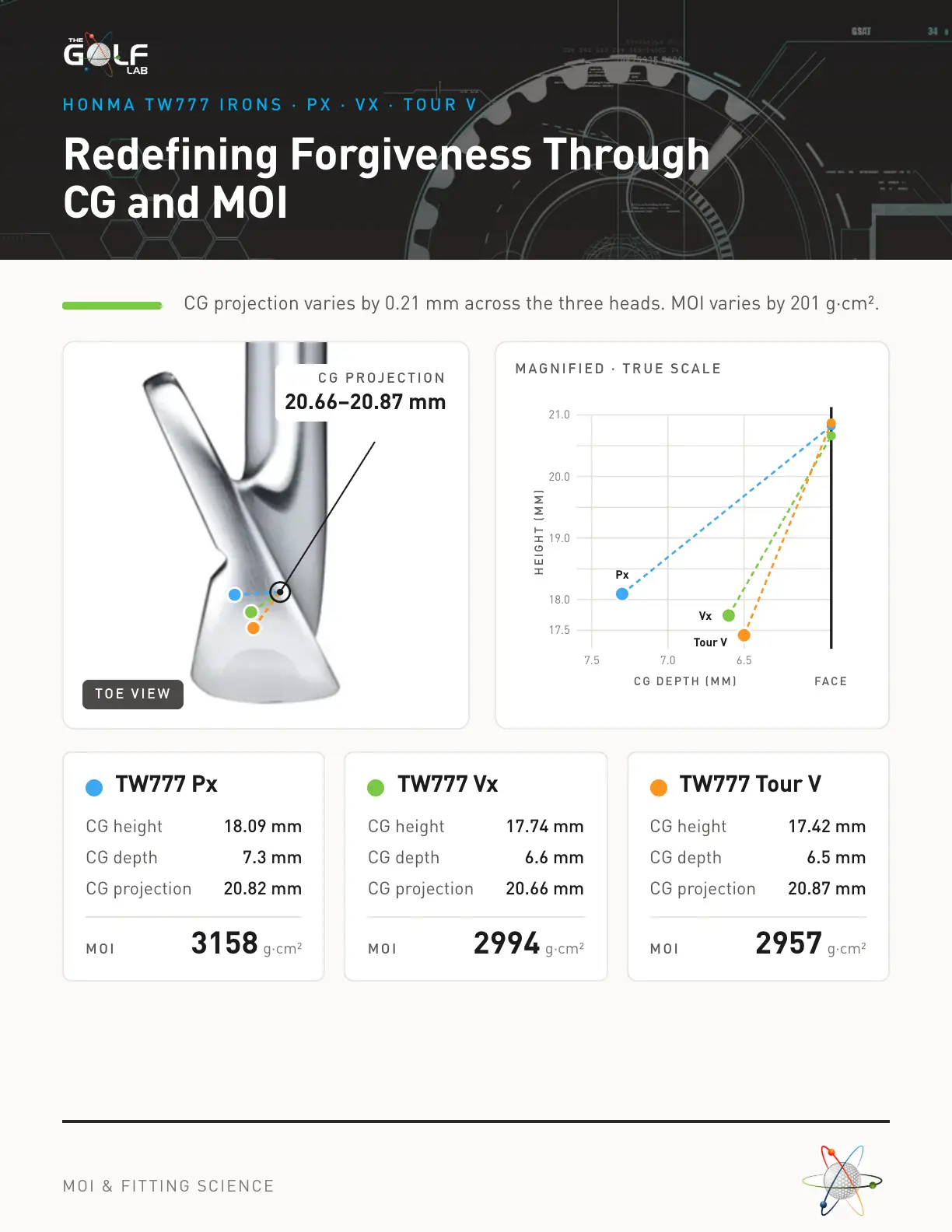
What makes the TW777 lineup particularly impressive is that all three models have a CG projection of roughly 21 mm (20.66–20.87 mm), despite being designed for very different golfers.
CG projection tells us where the clubhead’s center of gravity aligns with the face, helping us understand how the clubhead’s mass interacts with the ball at impact.
Typically, we expect significant differences in CG positioning between game-improvement irons and compact players irons. Yet Honma has maintained a remarkably consistent CG projection across its entire lineup.
This is especially impressive in the Tour V, where the compact players profile leaves less room to manipulate CG placement.
Understanding the Differences in Forgiveness
Although all three irons share similar CG projections, they offer different levels of forgiveness through their MOI characteristics.
TW777 Px Designed to maximize forgiveness, with the highest MOI of the three (3,158 g·cm²), giving it greater resistance to twisting on off-center strikes and improved consistency across the face.
TW777 Vx Balances stability and precision, providing additional forgiveness while maintaining the control expected from a players cavity iron.
TW777 Tour V Prioritizes precision and feedback in a compact profile. While its MOI (2,957 g·cm²) is lower than the Px’s, its 20.87 mm CG projection, the highest of the three, is particularly noteworthy for a players iron.
This highlights an important distinction: CG and MOI influence forgiveness in different ways.
MOI determines how resistant a clubhead is to twisting on off-center impacts, particularly toward the heel and toe. CG position influences launch and spin characteristics, especially in relation to vertical strike location.
“Forgiveness is more than clubhead size.”
Having similar CG projections doesn’t mean the three irons will perform identically. Instead, golfers can choose different levels of stability while keeping a comparable CG projection.
The Golf Lab’s Takeaway
What makes the Honma TW777 lineup stand out isn’t simply that the irons are forgiving. It’s how consistently Honma has managed CG positioning across three very different clubhead designs.
Achieving a CG projection of roughly 21 mm in the Px and Vx is interesting, but doing so in a compact players iron like the Tour V is particularly impressive.
The TW777 lineup shows that forgiveness is more than clubhead size. Understanding the relationship between CG, MOI, and strike location is essential to finding an iron that produces consistent results.
GET FIT
Find Out Which TW777 Iron Fits Your Game
While CG and MOI help explain how an iron is designed to perform, the real question is how those characteristics match your swing and strike tendencies. Book an iron fitting at The Golf Lab and discover which Honma TW777 model delivers the best combination of distance, consistency, and forgiveness for your game.
Don’t just choose an iron based on how it looks. Get fit based on how it performs.